This report by WSP for the Bay of Plenty Regional Council (BOPRC) was commissioned under the Access to Experts initiative, a Ministry for the Environment-funded service delivered by Beca and NZ Landcare Trust.
BOPRC sought advice to develop risk maps for four main contaminants (nitrogen, phosphorus, sediment and E. coli) to support its land managers in targeted conversations with land owners on potential mitigation opportunities.
WSP used empirical datasets such as LiDAR, soils, slope and waterways, to provide council staff with spatial tools and replicable methodology guidance (this report) to identify high-risk areas for contaminant loss and guide on-farm actions to meet freshwater management targets.
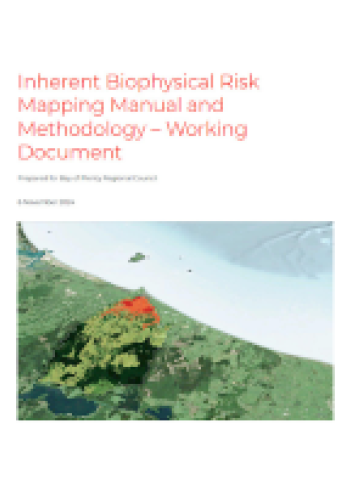
This report by WSP for the Bay of Plenty Regional Council (BOPRC) was commissioned under the Access to Experts initiative, a Ministry for the Environment-funded service delivered by Beca and NZ Landcare Trust.
BOPRC sought advice to develop risk maps for four main contaminants (nitrogen, phosphorus, sediment and E. coli) to support its land managers in targeted conversations with land owners on potential mitigation opportunities.
WSP used empirical datasets such as LiDAR, soils, slope and waterways, to provide council staff with spatial tools and replicable methodology guidance (this report) to identify high-risk areas for contaminant loss and guide on-farm actions to meet freshwater management targets.