This guidance document helps ensure coastal hazards and climate change are being factored into planning in coastal areas.
The Coastal hazards and climate change guidance is a tool to help decision makers consider the potential effects of climate change, now and in the future, based on the latest scientific information. This includes a 10-step process to assess the risks and determine what actions to take.
This guidance does not describe what will or won’t happen with climate change or sea-level rise in any specific area.
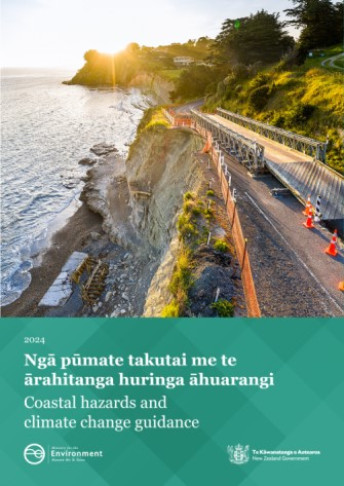
This guidance document helps ensure coastal hazards and climate change are being factored into planning in coastal areas.
The Coastal hazards and climate change guidance is a tool to help decision makers consider the potential effects of climate change, now and in the future, based on the latest scientific information. This includes a 10-step process to assess the risks and determine what actions to take.
This guidance does not describe what will or won’t happen with climate change or sea-level rise in any specific area.
October 2026 update
The update removes section 2.1.3 (interim allowances for relative sea-level rise) and associated references.
The removed section provided guidance for plan-making and land-use decisions prior to detailed hazard and risk assessment.
Users should refer to the National Policy Statement for Natural Hazards when undertaking natural hazard-related planning and decision-making under the Resource Management Act 1991 (RMA).
Key updates in this version
- Advances in sea-level rise science and updated global projections from the IPCC’s Sixth Assessment Report
- New relative sea-level rise projections and vertical land movement estimates from the NZ SeaRise Programme
- Advances in knowledge relating to the types of coastal hazards (such as sea-level rise, storms, flooding, or rising groundwater) and how they interact with each other
- Updated guidance on carrying out risk assessments and adaptation pathways planning.
This guidance is an update to the 2017 Coastal hazards and climate change: guidance for local government and the Interim guidance on the use of new sea-level rise projections released in 2022.
Who should use this guidance
The Coastal hazards and climate change guidance is for practitioners involved in land-use planning, resource management, building consenting, asset and flood risk management, and infrastructure planning.