Hero shot for RM Reform 10

RM Reform Update - September 2022 Tenth edition

The RM Reform Update is a regular update from the Ministry for the Environment to people and organisations that have an interest in the reform of the resource management system. If you would like to subscribe to these updates, please click here.

Message from the Ministry for the Environment

Tēnā koutou katoa, 

Over the past few months, we have been meeting with mayoral forums, key stakeholders and partners to share progress on our work to develop Aotearoa New Zealand’s future resource management system. 

Minister for the Environment David Parker has been delivering a series of speeches to share key decisions that have been made by Ministers about the future system. Most recently, he delivered a speech on how the reforms will protect our natural environment and respond to climate change.

We are now at the stage where the majority of policy decisions for the Natural and Built Environments Act and the Spatial Planning Act have been made and drafting of the new legislation is underway.

The Government intends to introduce the Natural and Built Environments Bill and the Spatial Planning Bill to Parliament in October 2022. The third Bill, the Climate Adaptation Bill, is expected to follow in 2023.

Over the next few months, the Ministry for the Environment will be continuing to help our stakeholders and partners understand the new system and answer any questions they may have through a series of webinars. If you would like to attend one of these, please register for an information session below. If you need further information, please contact us at rm.reform@mfe.govt.nz.

We hope you will engage through the select committee process as legislation is expected to be introduced to Parliament in October. This will help ensure the final legislation is as robust as possible and the new system fit for purpose now, and for generations to come. 

Ngā mihi nui,

Janine Smith, Deputy Secretary, Natural and Built System and Climate Mitigation
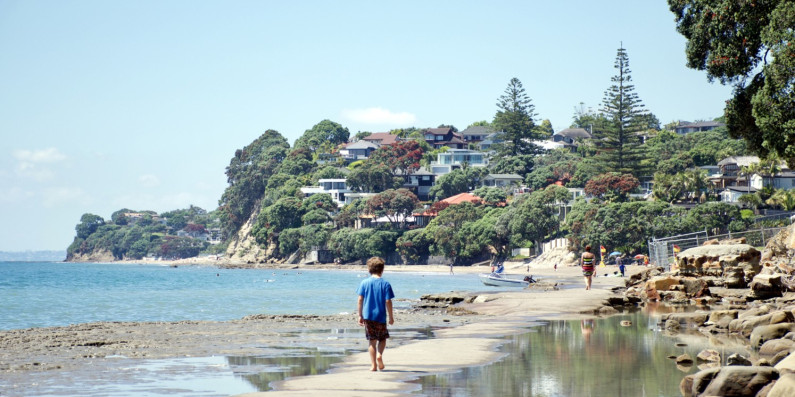
How the future resource management system will protect the environment and respond to climate change

Highlights of Minister Parker’s Speech

On 17 August, Minister Parker delivered a speech to an audience in Christchurch on how the future resource management system will better protect the environment as well as help reduce emissions and adapt to the effects of climate change.

You’ll find some highlights from the speech below, or you can read the Minister's full speech on the Beehive website.


The RMA has failed to protect the environment

Minister Parker pointed out that there are significant challenges across the resource management system. New Zealand’s natural environment is under significant pressure: climate change is speeding up, and many of our native plants, animals and ecosystems are under threat. 

“The state of many of our lakes, rivers, wetlands and estuaries is degraded, and that is an indicator of the RMA and its poor implementation. You should be able to pop down to your local river in summer and put your head under without the risk of getting crook,” he said.

He went on to say that one of the issues with the current system is that it focused on managing negative effects of resource use rather than providing direction on the positive outcomes we want for the environment.  

“The decline in the quality of our freshwater, and an inability to build enough houses when and where they are needed, are two such obvious examples,” he said.

Te Oranga o te Taiao – the health of the environment is interconnected with the health of all living things – is at the heart of the system

Minister Parker talked about how the Natural and Built Environments Act, as the main replacement for the Resource Management Act, will protect and enhance the environment through an outcomes framework covering land use as well as environmental protection, water takes and discharges and the use of coastal marine areas.

“Te Oranga o te Taiao is part of the purpose of the NBA and recognises the essential relationship between the ecological integrity of the natural environment and its capacity to sustain all life and the economy,”

“This will help achieve desired outcomes and better manage cumulative effects,” Parker said.

An outcomes framework for the natural and built environments

The NBA will specify required outcomes that need to be met for the natural and built environments.

“These outcomes will help set the expectations for decision-makers on the priorities that need to be delivered by the future system,” Parker said. 

“This includes New Zealand’s fresh water, coastal water, air, soil, ecosystems and their ability to sustain life are to be maintained in line with Te Oranga o te Taiao.”

Stronger national direction on matters of national significance

Parker set out how the current national direction will be codified into law through the National Planning Framework. This secondary legislation under the NBA will give direction on the outcomes sought in the NBA, for both natural and built environments.

National direction will set objectives, policies, limits, targets, standards and methods for matters of national significance, or where national consistency is desirable.

“Te Oranga o te Taiao will be operationalised through limits and targets set in the National Planning Framework (NPF) and expanded upon in Regional Spatial Strategies (RSSs) and NBA Plans,” said Minister Parker.

The new system will stipulate environmental limits and targets across air, indigenous biodiversity, coastal waters, estuaries, freshwater, and soil. 

Limits and targets primarily address the bio-physical aspects the environment and they will work together. Limits will set the starting point for the natural environment – reflecting the fact that we need to begin where we are. Targets will drive ongoing improvement, bringing in broader social, economic, and cultural goals.

Parker said they both will be set in the National Planning Framework.  

“Limits will manage risks to human health or the ecological integrity of the natural environment. Exemptions will only be granted in exceptional situations according to strict criteria.”

“When developing their plans, Regional Planning Committees will need to consider how to manage the natural environment to maintain limits and meet targets in the NPF,” he said.

Responding to Climate Change

The NPF will provide direction on reducing natural hazard risks and on climate change adaptation while RSSs will identify areas that are at risk of sea level rise, and other natural hazards that require an appropriate response.

The Climate Adaptation Bill, expected to be introduced to Parliament in 2023, will address the complex issues around managed retreat. High level aspects of it were consulted on recently as part of the National Adaptation Plan.

The reform of the resource management system will link with other work to address climate change.

“The transition to a low emissions and climate resilient New Zealand is expensive, and investors need certainty to get on with the job.”

“This means we cannot allow issues that have been settled through the Climate Change Response Act to be reopened in NBA processes. To avoid this, the NBA will state that the NPF must ‘not be inconsistent with’ provisions in an Emissions Reduction Plan or the National Adaptation Plan”, Minister Parker said.